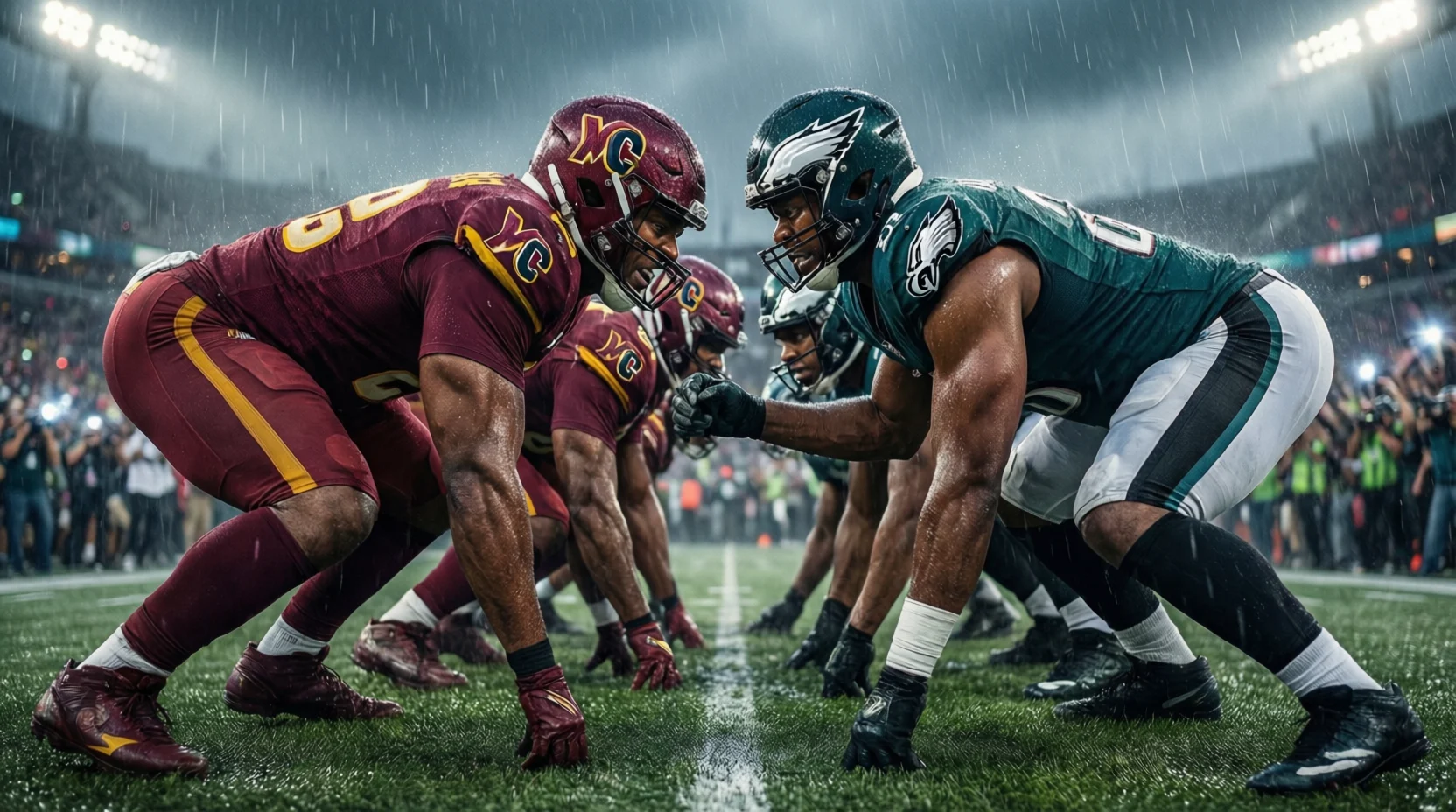
Whenever the Commanders vs Eagles matchup appears on the schedule, excitement instantly rises. Because this rivalry is rooted in history, geography, and emotion, every meeting feels bigger than an ordinary NFL game.
Moreover, since both teams represent the NFC East, each clash often carries playoff implications, divisional pride, and momentum-shifting consequences. As a result, fans, analysts, and players all approach this matchup with heightened intensity.
At the same time, this rivalry is fascinating because of contrast. While the Eagles have built a reputation for physical dominance and consistency, the Commanders have repeatedly entered games as disruptors, hungry to prove themselves. Consequently, outcomes are rarely predictable. Furthermore, coaching strategies, quarterback performances, and defensive adjustments often decide everything in the final moments. T
herefore, understanding this matchup requires more than surface-level stats. In this complete guide, you’ll explore the rivalry’s history, tactical matchups, offensive and defensive battles, key players, fan culture, and the factors that truly decide Commanders vs Eagles games.
The History Behind Commanders vs Eagles
To truly understand this rivalry, it’s important to look backward before looking forward. Because both teams have shared the NFC East for decades, they’ve met countless times under different names, eras, and identities. Previously known as Washington Football Team and Redskins, the Commanders still carry decades of competitive history against Philadelphia.
Meanwhile, the Eagles have long embraced a hard-nosed, physical identity. As a result, games between these teams have often been bruising, emotional, and fiercely contested. Over the years, playoff races, division titles, and season-defining wins have all passed through this matchup. Consequently, every new meeting adds another chapter to an already intense rivalry.
Why This NFC East Rivalry Still Matters
Unlike manufactured rivalries, Commanders vs Eagles matters because it’s organic. Since both fanbases are deeply passionate, emotions spill into every snap. Additionally, because divisional games count more in standings and tiebreakers, these matchups frequently influence postseason paths.
Moreover, familiarity breeds complexity. Because the teams know each other so well, coaches must innovate rather than rely on basic game plans. Therefore, chess-match play-calling becomes critical. Ultimately, this rivalry matters because it blends history, strategy, and emotion into one high-stakes contest.
Offensive Matchups That Shape the Game
Offensively, the Eagles typically emphasize balance. Because of their strong offensive line, they often control the trenches. As a result, both the run game and passing game open up naturally. Additionally, their ability to sustain long drives wears down opposing defenses over time.
On the other hand, the Commanders often rely on adaptability. Depending on personnel, they adjust their offensive identity week to week. Therefore, explosive plays, quick passes, and situational aggression become tools to challenge Philadelphia’s defense. When Washington succeeds offensively, it’s usually because they dictate tempo rather than react.
Quarterback Play: The Deciding Factor
In most Commanders vs Eagles games, quarterback performance becomes the ultimate difference-maker. Because defenses are aggressive and familiar, mistakes are punished immediately. Therefore, decision-making under pressure matters more than raw arm talent.
For the Eagles, quarterback efficiency, mobility, and leadership often anchor the offense. Meanwhile, the Commanders’ quarterback success depends heavily on rhythm and confidence. When Washington’s quarterback finds early momentum, the entire offense elevates. Consequently, the quarterback duel frequently defines the outcome.
Defensive Battles and Physicality
Defense is where this rivalry truly intensifies. Because both teams value toughness, defensive units play with edge and urgency. The Eagles traditionally rely on defensive line pressure, collapsing pockets and disrupting timing.
Conversely, the Commanders’ defense often focuses on speed and versatility. By mixing coverages and disguising blitzes, they aim to confuse quarterbacks. As a result, turnovers frequently swing momentum. Ultimately, whichever defense controls the line of scrimmage usually controls the game.
Coaching Strategies and Adjustments
Coaching plays a massive role in divisional matchups. Because familiarity limits surprises, in-game adjustments become essential. The Eagles’ coaching staff often emphasizes discipline, situational awareness, and physical dominance.
Meanwhile, the Commanders frequently lean into creativity. Trick plays, unexpected formations, and aggressive fourth-down decisions appear more often. Therefore, coaching courage sometimes tilts close games. In tight contests, halftime adjustments frequently determine who finishes stronger.
Special Teams: The Hidden Advantage
Although often overlooked, special teams can quietly decide Commanders vs Eagles games. Field position, kick returns, and clutch field goals all matter more in low-margin rivalry games.
Because defenses tighten, scoring opportunities shrink. As a result, a single special-teams mistake can change everything. Therefore, disciplined execution becomes just as important as star power.
Fan Culture and Stadium Energy
Few rivalries carry fan energy like Commanders vs Eagles. Eagles fans are known league-wide for intensity, volume, and loyalty. Meanwhile, Commanders fans bring resilience and passion rooted in decades of highs and lows.
Whether the game is in Philadelphia or Washington, atmosphere affects momentum. False starts, communication breakdowns, and emotional surges all stem from crowd involvement. Consequently, home-field advantage often feels amplified in this rivalry.
Recent Trends and Momentum Shifts
In recent seasons, momentum has swung back and forth. Sometimes the Eagles dominate physically. Other times, the Commanders disrupt expectations with gritty performances. Because rosters evolve, each season introduces new storylines.
However, one pattern remains consistent: close games. Regardless of records, these teams often push each other to the limit. Therefore, past results rarely guarantee future outcomes.
Key Factors That Decide the Winner
When analyzing Commanders vs Eagles, several factors repeatedly determine victory:
- Turnover differential
- Red-zone efficiency
- Third-down conversions
- Offensive line control
- Coaching adjustments
Because these elements compound, small advantages grow quickly. As a result, discipline and execution matter more than hype.
What This Matchup Means for the Season
Beyond bragging rights, this matchup often shapes the NFC East standings. Because division wins carry extra weight, one result can swing playoff probabilities.
Additionally, confidence gained from beating a rival often carries into subsequent games. Therefore, the emotional impact lasts longer than a single week. Ultimately, Commanders vs Eagles is not just a game—it’s a statement.
Frequently Asked Questions
Why is Commanders vs Eagles such a big rivalry?
Because both teams share the NFC East and decades of competitive history.
Do these games usually stay close?
Yes, divisional familiarity often leads to tight, physical contests.
What usually decides the winner?
Turnovers, quarterback play, and in-game coaching adjustments.
Does home-field advantage matter?
Yes, crowd energy often influences momentum and discipline.
Are these games important for playoffs?
Absolutely, division wins strongly affect postseason chances.
Final Thought
Ultimately, Commanders vs Eagles represents everything fans love about NFL rivalries. It’s physical, emotional, unpredictable, and deeply rooted in history.
While talent matters, heart, discipline, and adaptability matter more. Every snap carries weight, every mistake echoes louder, and every victory feels earned.
No matter the standings, when these teams meet, the game transcends statistics and becomes a battle of identity, pride, and resilience.

John Michael is the creative mind behind replyresponses.com, sharing witty, smart, and relatable responses for every situation — helping people text confidently, laugh often, and connect better every day.