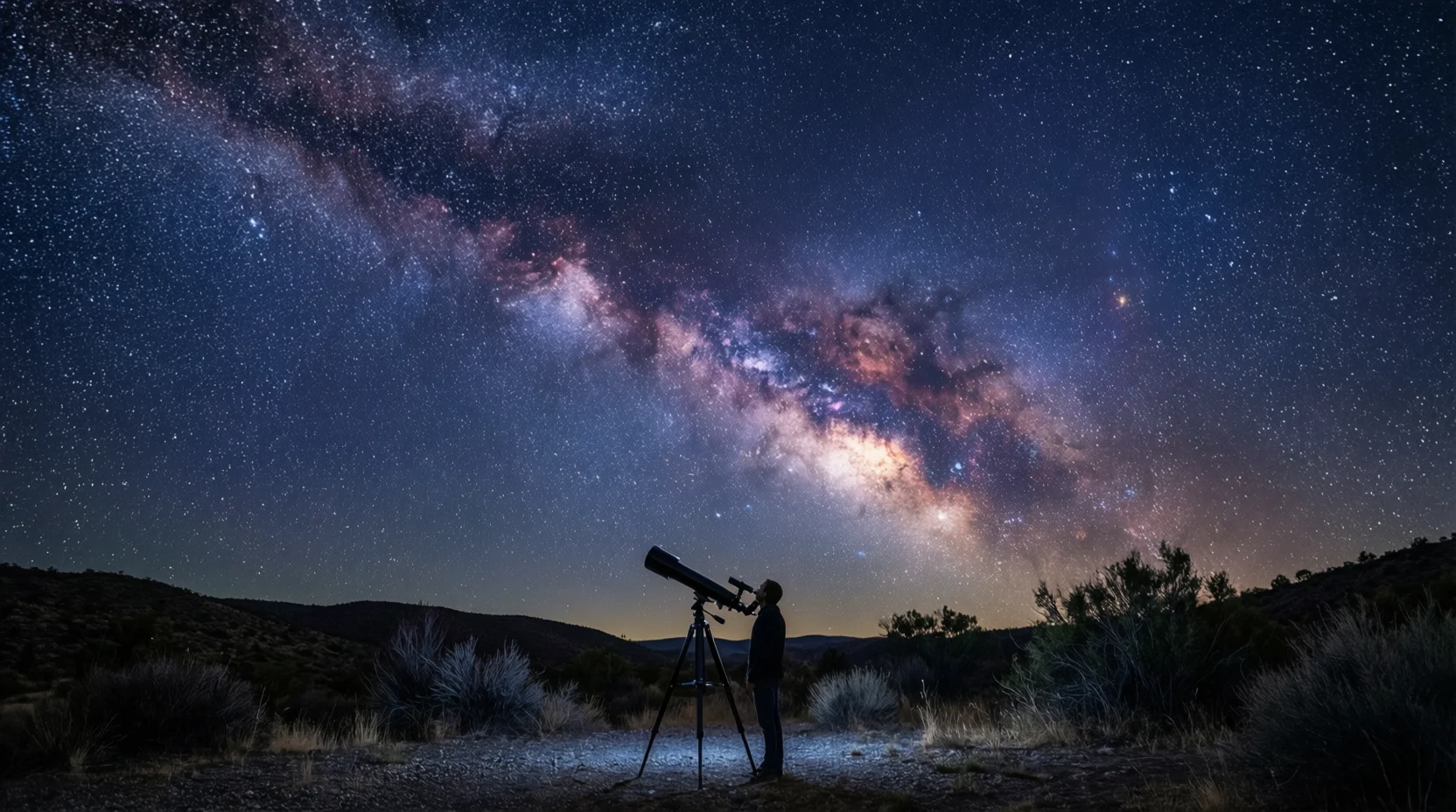
When people first encounter the phrase Astronomy 101, they are usually standing at the very beginning of an exciting journey. Often, it starts with a simple glance at the night sky. Then, almost instantly, questions arise.
What are those bright points of light? How far away are they? And why does the universe feel so endlessly vast? Because of this natural curiosity, astronomy becomes one of the most fascinating sciences to explore.
At the same time, many beginners feel overwhelmed. They assume astronomy is full of complex equations, confusing theories, and advanced science.
However, that belief is misleading. In reality, astronomy begins with observation, wonder, and basic understanding. Therefore, learning astronomy does not require advanced knowledge at the start. Instead, it requires curiosity and a willingness to explore.
For that reason, this Astronomy 101 guide is designed specifically for beginners. As you continue reading, you will gradually learn the fundamentals of astronomy, understand key concepts clearly, and build a strong foundation that makes the universe feel less intimidating and far more inspiring.
What Is Astronomy?
To begin with, astronomy is the scientific study of objects and phenomena beyond Earth’s atmosphere. In simple terms, it focuses on stars, planets, moons, galaxies, and the universe as a whole. Unlike other sciences that study Earth-based systems, astronomy looks outward, exploring the cosmos.
Moreover, astronomy is one of the oldest sciences known to humanity. Long before modern technology existed, people observed the sky to track seasons, navigate oceans, and understand time. Therefore, astronomy connects modern science with ancient curiosity.
Why Astronomy Matters
At first glance, astronomy may seem distant from daily life. However, its impact reaches far beyond telescopes and space missions. For example, understanding Earth’s position in space helps explain seasons, climate patterns, and even timekeeping.
Additionally, astronomy inspires innovation. Technologies such as satellites, GPS, and space imaging originated from astronomical research. Consequently, astronomy not only expands knowledge but also improves everyday life.
The Universe: A Basic Overview
When discussing astronomy, the universe becomes the central focus. Simply put, the universe includes everything that exists: all matter, energy, space, and time. Within it, billions of galaxies contain countless stars and planetary systems.
Furthermore, the universe is constantly expanding. While this concept may sound complex, it simply means space itself is stretching over time. As a result, galaxies move farther apart, making the universe even larger than before.
Stars: The Building Blocks of the Sky
Stars are among the most recognizable objects in the night sky. Essentially, stars are massive balls of hot gas that produce light and heat through nuclear reactions. Our Sun is one such star, although it appears much larger because it is closer to Earth.
Moreover, stars vary in size, color, and temperature. Some burn brightly for millions of years, while others exist for billions. Therefore, studying stars helps astronomers understand the life cycles of cosmic objects.
Planets and the Solar System
Moving closer to home, astronomy also focuses on planets and solar systems. Our solar system consists of the Sun, eight planets, moons, asteroids, and comets. Each planet follows a specific orbit, creating predictable patterns.
Additionally, planets differ greatly. Some are rocky, like Earth and Mars, while others are gas giants, like Jupiter and Saturn. Because of these differences, studying planets helps scientists understand how planetary systems form and evolve.
Moons, Asteroids, and Comets
Beyond planets, smaller celestial objects also play important roles. Moons orbit planets and often influence tides and stability. Asteroids, meanwhile, are rocky remnants from solar system formation. Comets, on the other hand, are icy bodies that glow when approaching the Sun.
Although smaller, these objects provide valuable clues about the early universe. Therefore, astronomers study them carefully.
Galaxies and Deep Space
As we move further outward, galaxies become the next focus. A galaxy is a massive system of stars, gas, dust, and dark matter held together by gravity. Our home galaxy, the Milky Way, contains billions of stars.
Furthermore, galaxies come in different shapes, including spiral, elliptical, and irregular forms. Because of this diversity, galaxies reveal how cosmic structures evolve over time.
Telescopes and Observing the Night Sky
Observation lies at the heart of astronomy. Telescopes allow astronomers to see distant objects more clearly by collecting and magnifying light. Some telescopes operate on Earth, while others orbit in space.
For beginners, even simple binoculars can reveal stunning views of the Moon and stars. Consequently, astronomy remains accessible to hobbyists as well as professionals.
Space Exploration and Astronomy
Closely connected to astronomy is space exploration. While astronomy focuses on observation, space exploration involves sending spacecraft to study planets, moons, and stars directly.
Through missions and probes, scientists gather data that deepens understanding of the universe. As a result, astronomy and space exploration work together to expand human knowledge.
Astronomy vs Astrology
One common source of confusion is the difference between astronomy and astrology. Astronomy is a science based on observation and evidence. Astrology, however, is a belief system that suggests celestial positions influence human behavior.
While astrology has historical roots, astronomy relies on scientific methods. Therefore, understanding this distinction is essential for beginners.
How to Start Learning Astronomy
Starting astronomy does not require expensive equipment. First, learning basic terms builds confidence. Next, observing the night sky regularly helps develop familiarity. Over time, books, apps, and star charts can enhance understanding.
Additionally, joining astronomy clubs or online communities provides support and shared learning. Because astronomy thrives on curiosity, learning becomes enjoyable rather than overwhelming.
Common Myths About Astronomy
Many people believe astronomy is too difficult or only for scientists. In reality, astronomy welcomes all learners. Another myth suggests you need advanced math, which is untrue at the beginner level.
By clearing these misconceptions, astronomy becomes more approachable and rewarding.
Frequently Asked Questions
What is astronomy in simple words?
Astronomy is the study of stars, planets, and everything beyond Earth.
Is astronomy hard to learn?
No, beginners can learn astronomy step by step without advanced knowledge.
Do I need a telescope to start astronomy?
No, observing with your eyes or binoculars is enough initially.
What do astronomers study?
They study celestial objects, space, and the universe’s structure.
What’s the difference between astronomy and astrology?
Astronomy is science; astrology is belief-based.
Final Thought
Ultimately, Astronomy 101 is not about memorizing facts; instead, it’s about learning how to look at the universe with curiosity and understanding.
As you explore stars, planets, and galaxies, you begin to see Earth’s place in a much larger story.
Through simple observation and gradual learning, astronomy transforms the night sky from mystery into meaning.
Therefore, whether you continue casually or dive deeper, astronomy offers a lifelong journey filled with wonder, discovery, and perspective.

Welcome to ReplyResponses.com, your go-to hub for quick, witty, and clever replies for every situation! Whether you’re looking to spice up your chats, craft the perfect comeback, or make your messages stand out, we’ve got you covered. From funny one-liners to smart responses, our platform helps you communicate with confidence and flair. Get ready to never run out of words again—because every conversation deserves the perfect reply!