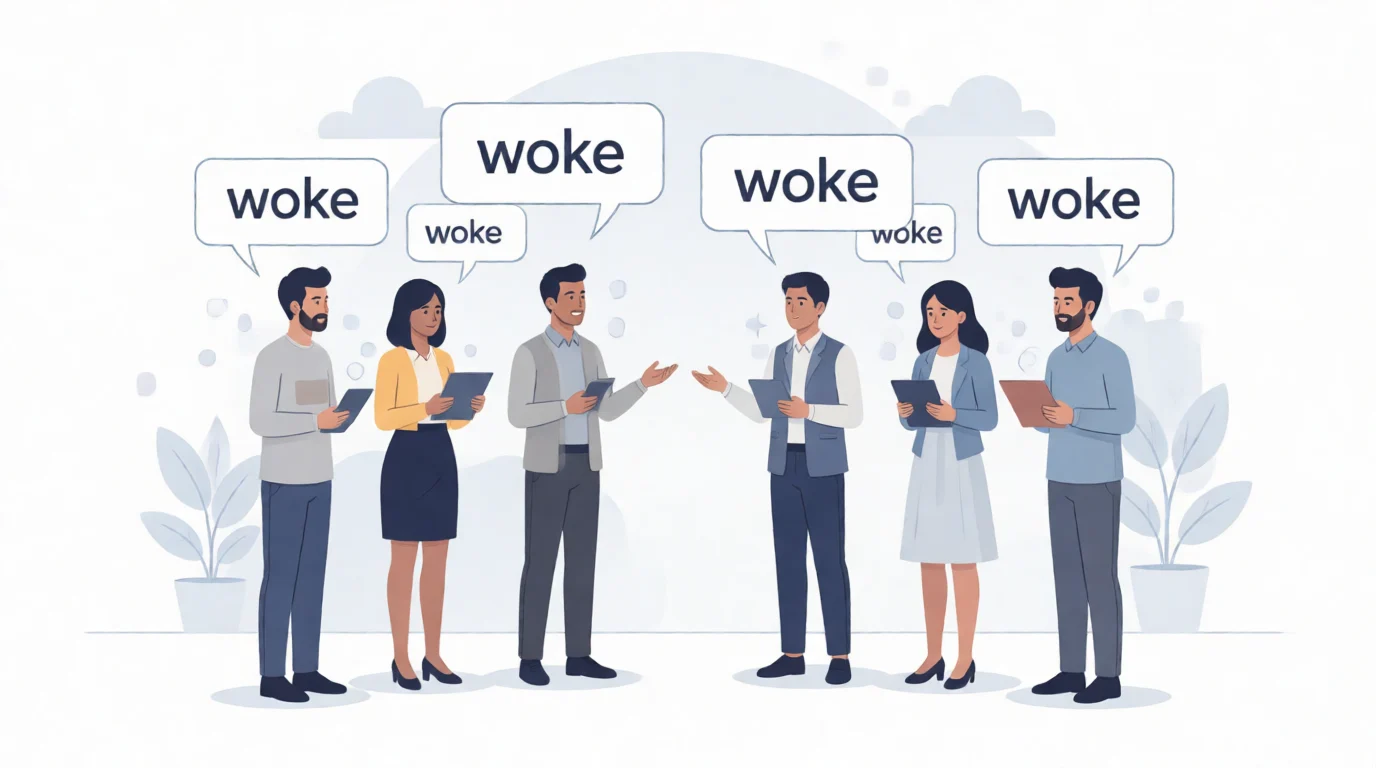
You’re scrolling through social media or watching a debate clip when someone drops the word “woke.” Sometimes it sounds like praise. Other times, it feels like an insult. You might hear, “stay woke,” or “that’s too woke,” and suddenly you’re wondering what does woke mean and why everyone seems to argue about it. The meaning has changed a lot over time, which is why it can feel confusing.
Let’s break it down in a clear, simple, and unbiased way.
Quick Answer:
Woke originally meant being aware of social injustice and inequality, but today it’s also used—often critically—to describe progressive or socially conscious ideas.
What Does Woke Mean Originally?
Is “woke” slang?
Yes. Woke started as slang.
Plain-English explanation
Originally, being woke meant:
- Being aware of racism and injustice
- Paying attention to social issues
- Not being ignorant of systemic problems
It came from African American Vernacular English (AAVE) and was used as a reminder to stay alert and informed.
Why people said “stay woke”
It was a way to say:
- “pay attention”
- “don’t ignore what’s happening”
- “be aware of injustice”
Short example
“stay woke and know your rights.”
Bold summary: Originally, woke meant being socially aware and informed about injustice.
What Does Woke Mean Today?
Over time, the meaning expanded and shifted.
Modern usage
Today, woke can mean:
- Supporting social justice causes
- Being progressive on social issues
- Caring about equality and fairness
But it can also be used sarcastically or negatively.
Why the meaning changed
- Political debates picked it up
- Media repeated it constantly
- People began using it as shorthand
- Critics started using it mockingly
Short example
“that movie feels a little woke.”
Bold summary: Today, woke can be positive or negative depending on who’s using it and why.
Positive vs Negative Meanings of Woke
Positive use
When used positively, woke means:
- Aware of inequality
- Open-minded
- Inclusive
- Educated on social issues
Example:
“she’s really woke about mental health.”
Negative or sarcastic use
When used negatively, woke means:
- Overly political
- Performative activism
- Pushing opinions
- Focusing too much on identity issues
Example:
“that brand went woke to look trendy.”
Where Is the Word Woke Commonly Used?
Common places
- Social media (twitter/x, tiktok, instagram)
- News and opinion pieces
- Political discussions
- Online comments and debates
Tone and style
- Casual to intense
- Often emotional
- Can be respectful or insulting
- Rarely neutral
Context and tone matter a lot.
Realistic Conversation Examples
Here are modern, realistic examples of how people use woke in everyday conversations. All lowercase, natural chat style.
- “stay woke about what’s going on”
- “that show got kinda woke”
- “being woke isn’t a bad thing”
- “he says everything is woke now”
- “brands trying too hard to be woke”
- “she’s woke and actually informed”
- “people misuse woke all the time”
- “this debate turned woke real fast”
When to Use and When Not to Use Woke
Because the word is loaded, it’s easy to misuse.
When to use it
Do:
- Use it carefully and clearly
- Explain what you mean if needed
- Use it in discussions about social awareness
- Be mindful of tone
When not to use it
Don’t:
- Use it to insult people casually
- Assume everyone agrees on the meaning
- Use it without context
- Use it to shut down conversation
Context comparison table
| Context | Example Phrase | Why It Works or Doesn’t |
|---|---|---|
| social discussion | “being woke means being aware” | clear |
| praise | “she’s woke about equality” | positive |
| insult | “everything is woke now” | vague |
| professional setting | “this policy is woke” | unclear |
Similar Words or Alternatives
If you want to avoid confusion, consider clearer words.
| Term | Meaning | When to Use |
|---|---|---|
| socially aware | understands issues | neutral |
| progressive | supports reform | political |
| inclusive | welcomes diversity | positive |
| politically correct | careful language | mixed |
| activist | advocates change | specific |
| informed | educated on issues | neutral |
These words reduce misunderstanding.
Why Woke Became Controversial
Woke became controversial because:
- It moved from community slang to mainstream media
- It became politicized
- Different groups use it differently
- It’s often used as a label, not a description
That’s why the same word can feel empowering to one person and annoying to another.
Frequently Asked Questions
Is woke a bad word?
No. It depends on context and tone.
Is woke political?
Today, it’s often used in political or cultural debates.
Can woke be positive?
Yes. Originally, it was entirely positive.
Is woke still used seriously?
Yes, but it’s also used sarcastically a lot.
Who started the term woke?
It originated in Black American communities.
Should I avoid using woke?
Not necessarily, but use it carefully.
Why Understanding “Woke” Matters
Words shape conversations. Understanding what woke really means helps avoid arguments, misunderstandings, and online drama. It also helps you recognize when the word is being used thoughtfully versus emotionally.
Final Thought
So, what does woke mean? Originally, it meant being aware of social injustice. Today, it can mean socially conscious—or be used critically to describe progressive ideas.
The meaning depends entirely on context, tone, and who’s speaking. Knowing that helps you understand modern conversations without getting caught in the confusion.

Welcome to ReplyResponses.com, your go-to hub for quick, witty, and meaningful replies! Whether you’re looking for clever comebacks, thoughtful answers, or just some fun conversation starters, we’ve got you covered. Our platform makes responding easier, smarter, and way more enjoyable, helping you connect, engage, and impress effortlessly.