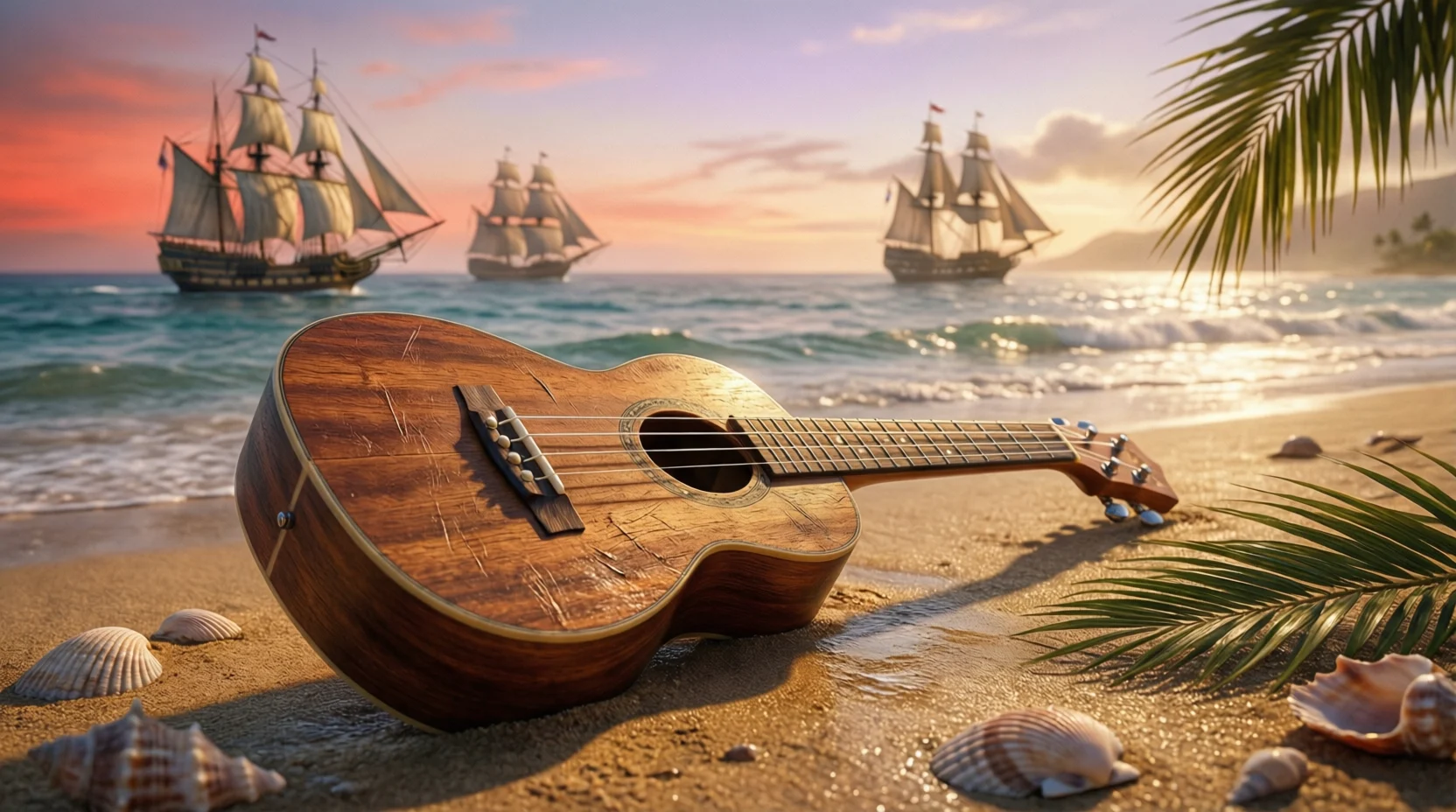
Although the ukulele appears small and lightweight, its history, however, stretches across continents, cultures, and centuries.
From the very beginning, this charming instrument carried more than sound; instead, it carried stories, traditions, and emotions.
Initially, its roots formed far away from Hawaii, yet gradually, it became deeply woven into Hawaiian identity. Over time, as music evolved, the ukulele simultaneously adapted, survived, and flourished.
Moreover, despite facing periods of decline, it repeatedly returned stronger than before. Today, thanks to modern musicians and digital platforms, the ukulele enjoys a powerful global revival.
Therefore, by exploring its complete history step by step, we can clearly understand how such a simple instrument managed to achieve such lasting cultural importance.
The Meaning and Identity of the Ukulele
To begin with, the word “ukulele” itself carries cultural depth. In Hawaiian, it is often translated as “jumping flea,” which, interestingly, refers to the quick finger movements of players across the strings.
While this meaning may sound playful, it perfectly reflects the instrument’s lively personality. Furthermore, beyond its literal translation, the ukulele symbolizes joy, storytelling, and community in Hawaiian culture.
As a result, the instrument quickly became more than just a musical tool. Instead, it transformed into a cultural voice, expressing emotion, tradition, and celebration. Consequently, understanding the ukulele’s name helps us understand its spirit.
Portuguese Roots – The Instruments That Started It All
Before the ukulele found its Hawaiian home, its story, however, began in Portugal. During the late 19th century, Portuguese immigrants arrived in Hawaii, bringing with them small string instruments such as the braguinha and the machete.
These instruments, although unfamiliar to Hawaiians at first, immediately attracted attention. Moreover, their bright sound and compact size made them appealing. Gradually, Hawaiian musicians began experimenting with these instruments.
As time passed, they adapted the design, adjusted the tuning, and modified the playing style. Therefore, while the ukulele is strongly associated with Hawaii, its Portuguese ancestry remains an essential part of its history.
Arrival in Hawaii – Birth of a New Instrument
Once Portuguese immigrants settled in Hawaii, a musical exchange naturally followed. Initially, the braguinha and machete were played within immigrant communities. However, very quickly, native Hawaiians became fascinated by their sound.
As a result, local musicians started integrating Hawaiian musical traditions with Portuguese craftsmanship. Over time, this fusion led to the creation of a completely new instrument. Consequently, the ukulele was born.
Unlike its predecessors, it reflected Hawaiian rhythms, melodies, and cultural expression. Therefore, Hawaii did not merely adopt the instrument; instead, it reshaped it entirely.
King Kalākaua and Royal Support
At this point, royal influence played a crucial role. King Kalākaua, often called the “Merrie Monarch,” strongly supported Hawaiian arts and music. Because of his encouragement, the ukulele gained visibility and respect.
Frequently, it was featured at royal gatherings, celebrations, and ceremonies. As a result, the instrument quickly spread across the islands. Moreover, royal endorsement gave the ukulele cultural legitimacy. Therefore, what began as an adapted instrument soon became a national symbol of Hawaiian identity.
Early Ukulele Makers and Craftsmanship
As demand increased, skilled craftsmen began producing ukuleles locally. Initially, these instruments were handmade using native woods. Furthermore, builders focused on sound quality, comfort, and durability.
Over time, craftsmanship improved, and unique designs emerged. Consequently, each ukulele carried both musical and artistic value. Later, as popularity expanded beyond Hawaii, mass production began. However, traditional handmade ukuleles continued to hold special importance. Thus, craftsmanship remained central to the ukulele’s story.
Ukulele’s Rise in the Early 20th Century
The early 20th century marked a turning point. Particularly, the 1915 Panama-Pacific International Exposition introduced Hawaiian music, including the ukulele, to mainland America.
As audiences listened, interest rapidly grew. Soon after, musicians and entertainers embraced the instrument. Consequently, the ukulele became a household name.
Moreover, its affordability and simplicity made it accessible to beginners. Therefore, within a short time, the ukulele spread across the United States.
Ukulele in American Pop Culture
As popularity continued, Hollywood played a significant role. Films, radio shows, and recordings frequently featured the ukulele. Meanwhile, jazz and swing musicians incorporated it into performances.
As a result, the instrument gained a fun, relaxed image. Furthermore, its presence in pop culture made it appealing to younger generations. Consequently, the ukulele became associated with leisure, happiness, and creativity.
Decline and Challenges Over the Decades
However, musical trends constantly change. As electric guitars and louder instruments gained dominance, the ukulele gradually faded from mainstream attention. During this period, it was often viewed as outdated or novelty-based.
Nevertheless, despite reduced popularity, it never vanished completely. Instead, it survived within niche communities, schools, and traditional Hawaiian music. Therefore, even during decline, the ukulele quietly preserved its legacy.
The Modern Revival of the Ukulele
Eventually, revival arrived. With the rise of folk music and independent artists, the ukulele returned to the spotlight. Moreover, schools adopted it as a beginner-friendly instrument. Simultaneously, online platforms allowed musicians to share performances worldwide.
As a result, a new generation discovered the ukulele. Furthermore, its portability and affordability made it ideal for modern lifestyles. Therefore, the ukulele once again gained global popularity.
Famous Ukulele Players Who Shaped History
Throughout history, influential players helped redefine the ukulele. Early Hawaiian musicians preserved tradition, while modern artists expanded musical boundaries. Additionally, contemporary performers demonstrated its versatility across genres.
Consequently, the ukulele evolved from a simple folk instrument into a powerful creative tool. Therefore, individual artists played a vital role in shaping its image.
Evolution of Ukulele Types and Styles
As music diversified, ukulele designs also evolved. Initially, the soprano ukulele dominated. Later, concert and tenor versions emerged, offering deeper tones.
Eventually, the baritone ukulele expanded musical range even further. Moreover, modern builders continue experimenting with materials and electronics. As a result, players today enjoy unmatched variety and flexibility.
Ukulele’s Global Influence Today
Currently, the ukulele enjoys worldwide appreciation. From Europe to Asia, communities celebrate its sound.
Additionally, festivals, workshops, and online groups continue to grow. As cultures blend, the ukulele acts as a bridge between traditions. Therefore, its influence extends far beyond its origins.
Why the Ukulele Remains Timeless
Ultimately, the ukulele endures because of its simplicity and emotional connection. Although trends change, its joyful sound remains universal.
Moreover, it encourages creativity without intimidation. Therefore, regardless of era, the ukulele continues to inspire musicians of all ages.
Conclusion
In conclusion, the history of the ukulele is a journey of cultural fusion, resilience, and creativity. From Portuguese beginnings to Hawaiian transformation, and eventually to global recognition, the instrument has continuously evolved.
Despite facing decline, it always found a way to return. Today, its revival proves that simplicity often carries the greatest power.
Therefore, the ukulele’s story is not just about music; instead, it is about connection, tradition, and timeless joy.
FAQs
Where did the ukulele originate?
It originated from Portuguese instruments and was developed in Hawaii.
Why is the ukulele linked to Hawaii?
Because Hawaiians transformed it and embraced it culturally.
Who helped popularize the ukulele?
King Kalākaua and early Hawaiian musicians played key roles.
Is the ukulele still evolving today?
Yes, modern designs and global styles continue shaping it.
Why is the ukulele so popular now?
Because it is affordable, portable, and easy to learn.

John Michael is the creative mind behind replyresponses.com, sharing witty, smart, and relatable responses for every situation — helping people text confidently, laugh often, and connect better every day.