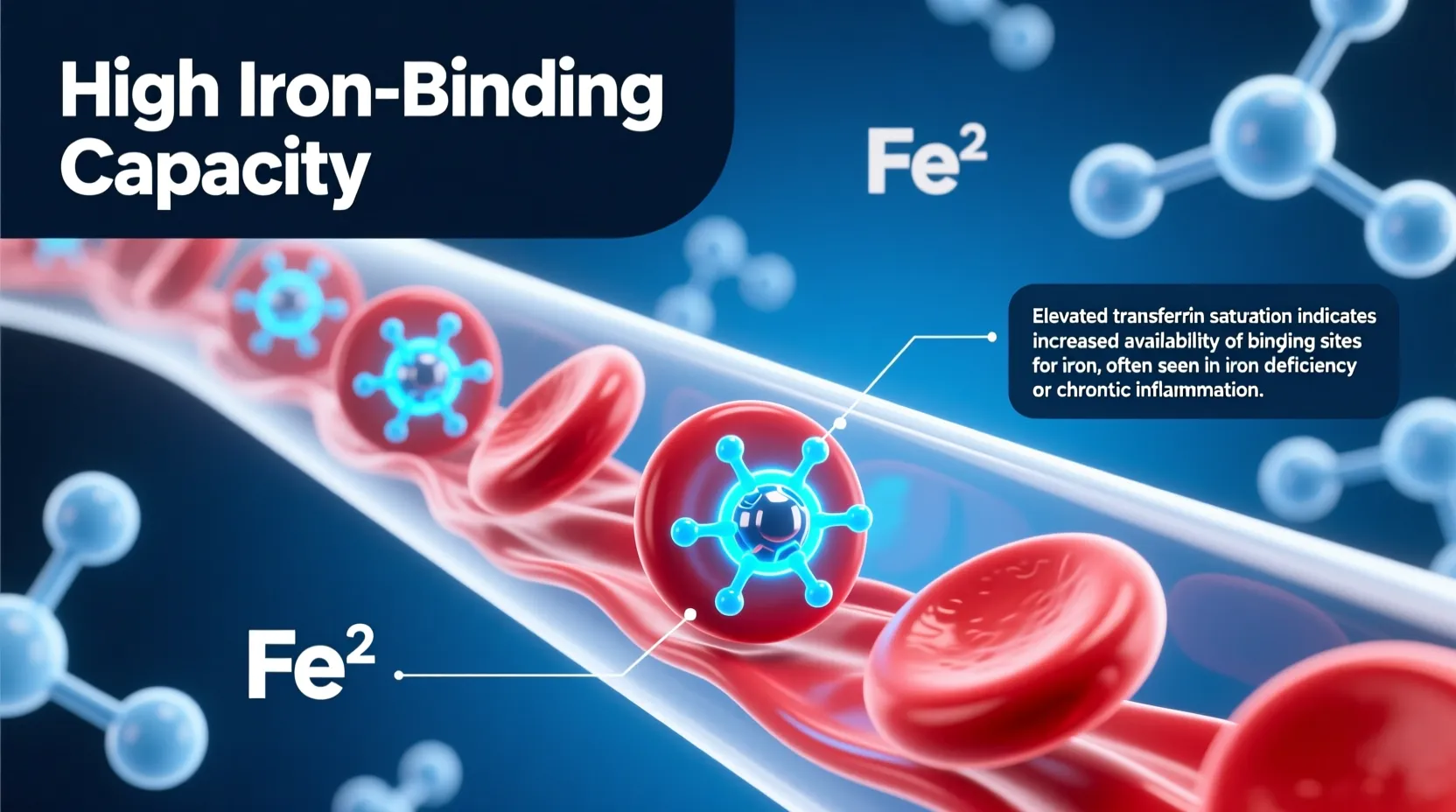
If you’ve ever looked at your lab results and spotted something called “iron-binding capacity”, you’re not alone in feeling confused.
The first time I saw it on a blood report, I literally Googled it thinking it was some kind of secret medical code.
And then the numbers were high which made me panic even more.
But don’t worry, it’s actually much simpler than it looks.
Quick Answer:
High iron-binding capacity means your blood is trying to capture more iron because your iron levels are likely low. It’s the body’s way of saying, “I need more iron, please!”
What Does High Iron-Binding Capacity Mean in Text?
When someone talks about iron-binding capacity, they’re referring to a lab test called TIBC (Total Iron-Binding Capacity). It measures how much iron your blood can bind.
So when the value is high, it usually means your iron stores are low, and your body is increasing its ability to grab and transport more iron.
Example sentence:
“My doctor said my iron-binding capacity is high, so it probably means I’m low on iron.”
In short:
High iron-binding capacity = Low iron = Your body trying harder to hold onto iron.
Where Is “High Iron-Binding Capacity” Commonly Used?
You’ll typically see this phrase in:
• 🔬 Medical reports
• 🏥 Doctor’s explanations
• 📱 Health chats or messaging someone about lab results
• 🧪 Blood test discussions
• 🧍♀️ Online forums about symptoms like fatigue, dizziness, or anemia
This isn’t slang, so it’s not used on TikTok, Snapchat, or gaming chats.
It’s a formal, medical-context phrase, mostly used when discussing test results or health conditions.
Examples of “High Iron-Binding Capacity” in Conversation
A: just saw my tests… it says iron-binding capacity is high 😕
B: that usually means ur iron is low. did the doc say anything?
A: my TIBC came back high… is that bad?
B: not usually bad but it means u might be low on iron
A: why would iron-binding capacity be high?
B: happens a lot with anemia or low iron levels
A: google is scaring me lol my iron-binding capacity is high
B: don’t panic 😂 get the full iron panel first
A: my report says high tibc
B: yeah that’s the iron-binding thing… usually means low iron stores
When to Use and When Not to Use “High Iron-Binding Capacity”
When to Use
✅ When discussing lab results
✅ When explaining anemia or low iron levels
✅ When talking to a doctor or nutritionist
✅ When asking someone for help understanding a report
When Not to Use
❌ In casual conversations unrelated to health
❌ As slang — it isn’t slang
❌ In joking or flirty texts
❌ In professional emails unless medically relevant
Comparison Table
| Context | Example Phrase | Why It Works |
|---|---|---|
| Friend Chat | “my iron-binding capacity is high… guess i need iron gummies 😅” | Casual but relevant |
| Work Chat | “I may need time off for follow-up labs regarding iron levels.” | Professional and clear |
| “My recent blood tests show elevated iron-binding capacity. I’m following up with my doctor.” | Formal and appropriate |
Similar Terms or Alternatives
| Term | Meaning | When to Use |
|---|---|---|
| TIBC | Total iron-binding capacity | When reading or explaining lab reports |
| Transferrin | Protein that carries iron | When discussing deeper health details |
| Iron saturation | % of iron attached to transferrin | When comparing iron storage levels |
| Ferritin | Stored iron in the body | When looking for anemia or deficiency |
| Low iron levels | Low serum iron | Simple, everyday explanation |
FAQs About High Iron-Binding Capacity
Is high iron-binding capacity dangerous?
Not usually by itself. It’s an indicator of low iron, not a disease.
Does high TIBC mean anemia?
It often suggests iron-deficiency anemia, but other tests confirm it.
Can dehydration affect iron-binding capacity?
Not typically — ferritin and serum iron matter more.
How is high iron-binding capacity treated?
Doctors usually treat the underlying cause, often with iron supplements.
Can diet fix high TIBC?
Yes, foods rich in iron such as spinach, red meat, lentils, and beans may help, depending on your doctor’s guidance.
Conclusion
Seeing high iron-binding capacity on your lab report can be confusing, but it’s a clear message from your body: iron levels are likely low, and it’s trying harder to bind more iron.
It’s not slang, not casual texting, and definitely not something you’d use in everyday chats unless you’re talking about health.
If you’ve received this result, it’s best to review your full iron panel with a healthcare professional so you understand the complete picture.

Stuck on what to say? ReplyResponses.com gives you clever, funny, and savage comebacks for every moment — because silence isn’t golden when you can drop a perfect reply!