At first, it usually starts small. Maybe you notice a tiny itchy patch on your arm or leg and assume it’s just a bug bite.
However, as days pass, that spot slowly grows wider, becomes redder, and forms a strange ring shape. Suddenly, confusion sets in.
You might wonder if it’s a rash, eczema, or something else entirely. Because ringworm often looks harmless at the beginning, many people miss the early signs.
So, to avoid confusion and unnecessary worry, understanding exactly what ringworm looks like becomes extremely important.
Quick Answer:
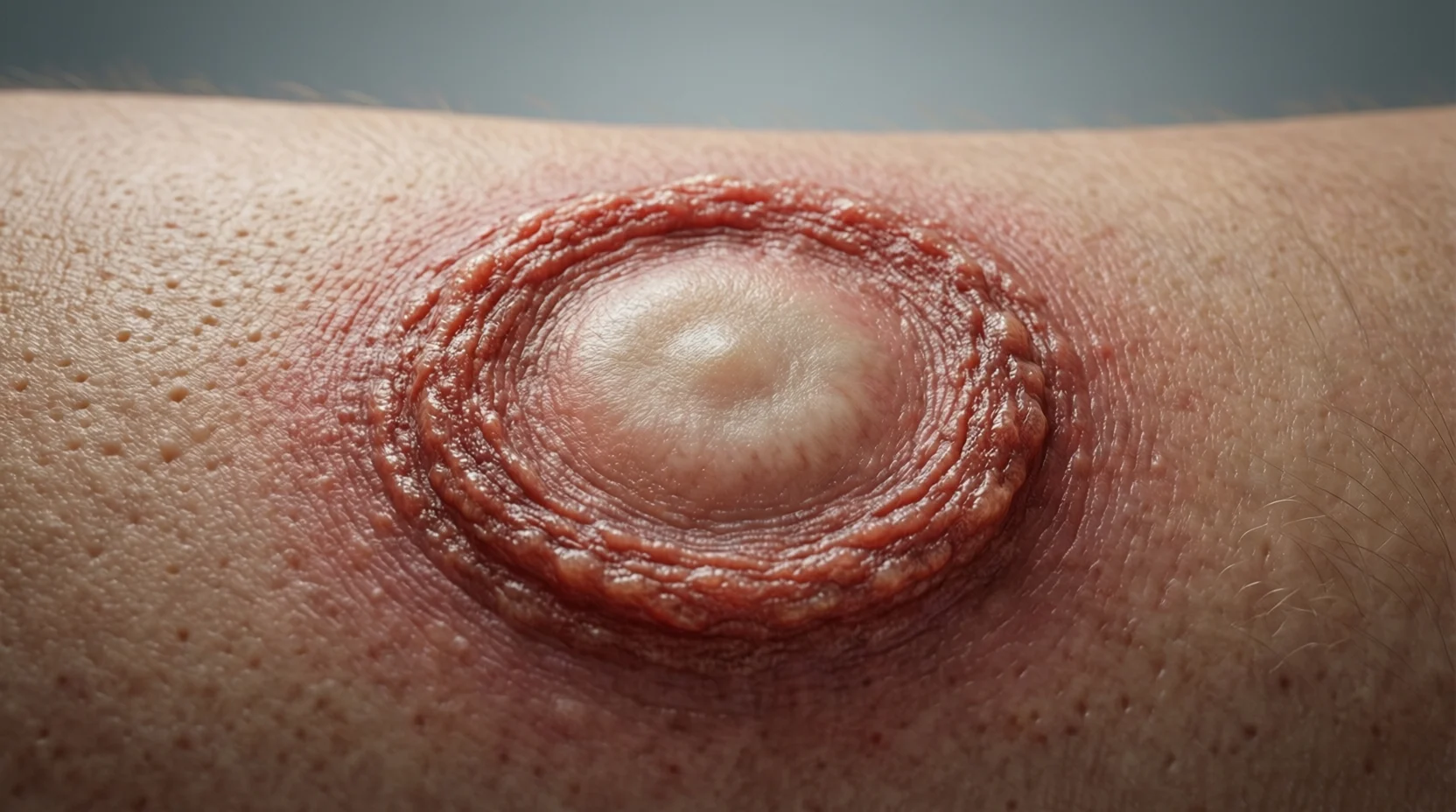
Ringworm usually looks like a red, circular rash with a raised, scaly border and clearer skin in the center.
What Ringworm Looks Like (Plain Explanation)
Despite its name, ringworm is not caused by worms. Instead, it’s a fungal skin infection.
Visually, ringworm usually appears as:
- A round or oval-shaped rash
- Red or pink edges
- A raised, scaly, itchy border
- Clearer or normal-looking skin in the center
Because of this pattern, it often resembles a ring, which explains the name.
Bold Summary: Ringworm looks like a red, scaly ring with a clearer center and itchy, raised edges.
Why Ringworm Has a Ring Shape
Interestingly, the fungus grows outward rather than inward. As a result, the center begins to heal while the edges stay active. Therefore, the rash expands in a circular shape. This outward growth is one of the clearest signs that help distinguish ringworm from other skin conditions.
Where Ringworm Commonly Appears on the Body
Ringworm can show up almost anywhere. However, the appearance may slightly change depending on location.
Common areas include:
- arms and legs
- chest or back
- scalp (especially in children)
- feet (athlete’s foot)
- groin area (jock itch)
Tone of use: medical but commonly discussed in casual and informal conversations.
What Ringworm Looks Like in Different Areas
| Body Area | Appearance |
|---|---|
| skin | red ring with scaly edges |
| scalp | flaky patches, hair thinning |
| feet | cracked skin, peeling, redness |
| groin | itchy red rash with defined edges |
| nails | thickened, discolored nails |
Because of these variations, location matters when identifying it.
Early vs Later Stages of Ringworm
Early stage:
- small red spot
- mild itching
- slight scaling
Later stage:
- larger ring shape
- intense itching
- more redness and flaking
Therefore, early detection helps stop spreading.
Realistic Examples of How People Describe Ringworm
- “it started as a small red dot and slowly spread outward”
- “the middle looks normal but the edges are itchy”
- “it feels dry and flaky around the ring”
- “scratching makes it worse”
- “it doesn’t hurt but it definitely itches”
- “it looks like a target or bullseye”
- “the border is darker than the center”
When It Might Be Ringworm And When It Might Not Be
✅ When it likely is ringworm
- circular shape
- itchy border
- spreading outward
- scaly texture
❌ When it may be something else
- no ring shape
- oozing or crusting
- severe pain
- sudden swelling
Quick Comparison Table
| Situation | Example | Why |
|---|---|---|
| ringworm | red ring rash | fungal growth pattern |
| eczema | patchy dryness | no circular edge |
| psoriasis | thick scales | silvery flakes |
| insect bite | small bump | no spreading ring |
Similar Skin Conditions That Look Like Ringworm
- Eczema: dry, itchy patches without a ring
- Psoriasis: thick, flaky plaques
- Allergic rash: uneven redness
- Hives: raised bumps that move
- Contact dermatitis: reaction-based irritation
Knowing these differences helps avoid misidentification.
FAQs About What Ringworm Looks Like
1. Does ringworm always look like a ring?
Mostly yes, but early stages may not.
2. Is ringworm itchy?
Yes, itching is very common.
3. Can ringworm be skin-colored?
Sometimes, especially on lighter skin.
4. Does ringworm hurt?
Usually no, just itchy.
5. Can ringworm spread if scratched?
Yes, scratching can spread it.
6. Does ringworm go away on its own?
Usually not without treatment.
7. Can ringworm appear suddenly?
It often starts small and grows gradually.
Final Thought
Ringworm may sound alarming, but visually, it follows a very recognizable pattern once you know what to look for.
That circular shape, the scaly raised edges, and the clearer center are key clues that separate it from other skin conditions.
While it can appear in different forms depending on the body area, the underlying look remains consistent.
Most importantly, spotting ringworm early helps prevent spreading and unnecessary discomfort.
By understanding its appearance clearly, you can react calmly, avoid panic, and take appropriate next steps with confidence.

Stuck on what to say? ReplyResponses.com gives you clever, funny, and savage comebacks for every moment — because silence isn’t golden when you can drop a perfect reply!