Ever seen someone drop the phrase “persona non grata” in a text or social media post and instantly felt like you missed a whole lesson in school? Same.
The first time I saw it, I thought it was some fancy movie quote or a spell from Harry Potter.
Turns out… it’s not slang at all but people definitely use it online to make a strong point.
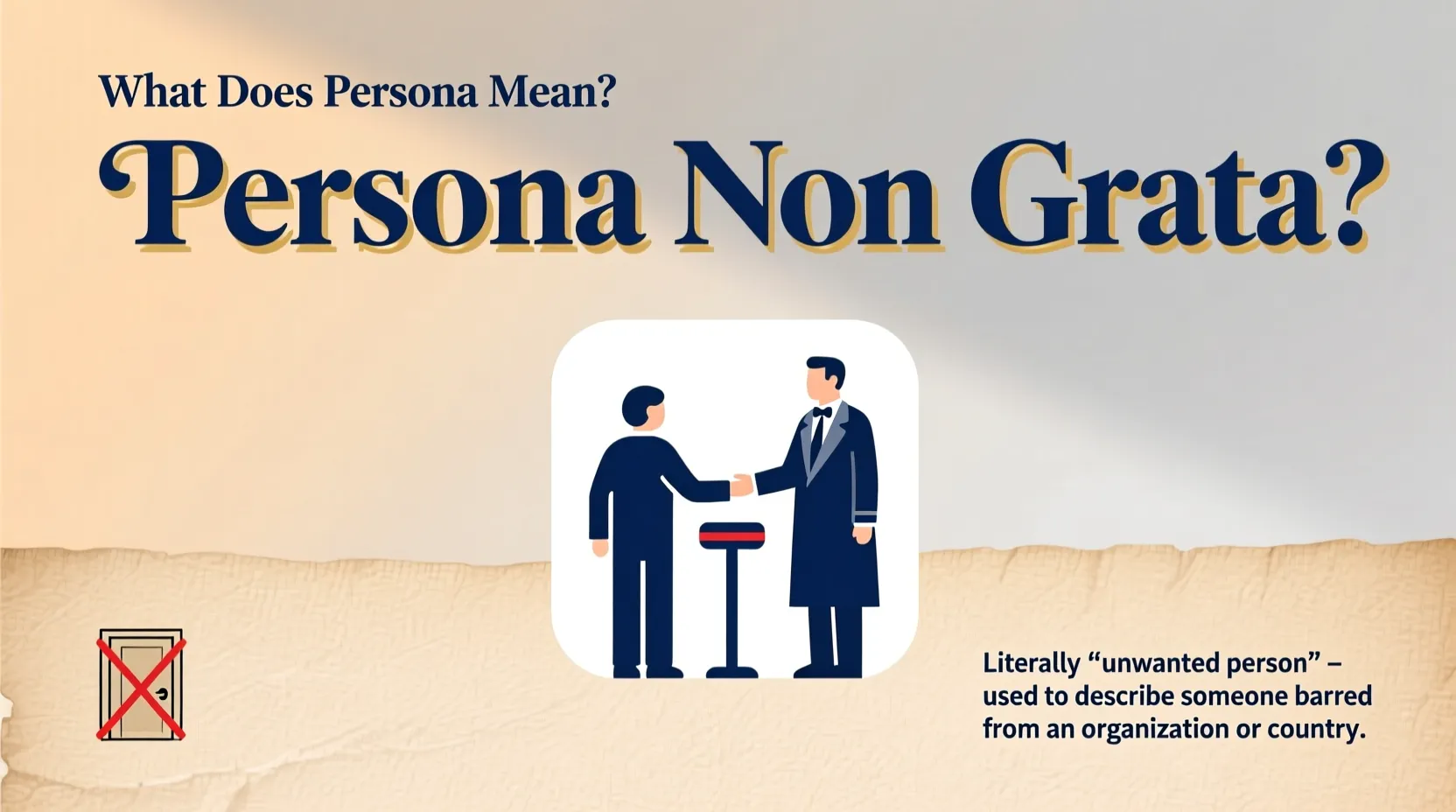
Quick Answer: Persona non grata means “an unwelcome person.” It’s a serious, formal, and sometimes dramatic way of saying someone is no longer accepted, trusted, or wanted in a place or group.
What Does Persona Non Grata Mean in Text?
Persona non grata is a Latin phrase that translates to “person not welcome.” When someone uses it in texting, they’re saying that a person is banned, disliked, or completely unwelcome in a space — whether that’s a friend group, a party, or even a comment section.
Example sentence:
“After what he said yesterday, he’s officially persona non grata in our group chat.”
In short: persona non grata = unwelcome person = someone who isn’t allowed or wanted.
Where Is Persona Non Grata Commonly Used?
You’ll see this phrase in places where people want to sound serious, witty, dramatic, or a little formal.
Common places include:
• 📱 Texting when making a strong point
• 💬 Group chats
• 🎭 Twitter/X and TikTok when calling someone out
• 🎮 Gaming chats (usually jokingly)
• 📚 Articles, essays, or serious discussions
• 🏛 Politics, diplomacy, and official statements
Tone: It’s formal, but people also use it online in a dramatic or sarcastic way for fun.
Examples of Persona Non Grata in Conversation
A: bro after that prank you’re persona non grata at my place 😂
B: ok fair 😂
A: she blocked me everywhere. guess i’m persona non grata now 😭
B: yeah that’s tough
A: he stole my fries… he’s persona non grata for 24 hrs
B: punishment accepted 🍟
A: i told him not to join the vc. he’s persona non grata today
B: lmao noted
A: why wasn’t i invited?
B: group decided u were persona non grata after the spoilers 😭
A: did you kick him?
B: yup. persona non grata effective immediately 🚫
When to Use and When Not to Use Persona Non Grata
When to Use
• When you want a dramatic or strong phrase
• When joking with friends about someone being “banned”
• In discussions about behavior, trust, or boundaries
• When referencing political or diplomatic actions
• When describing someone who’s unwelcome in a group
When Not to Use
• In professional communication unless it’s relevant
• When the situation is very serious or sensitive
• In emergencies
• When talking to someone who may not understand dramatic wording
• When a simple explanation would be clearer
Comparison Table
| Context | Example Phrase | Why It Works |
|---|---|---|
| Friend Chat | “you’re persona non grata for stealing my snacks 😂” | Casual + funny |
| Work Chat | “He is no longer part of the project team.” | Clear and professional |
| “This individual is no longer permitted to participate in the event.” | Formal, serious, direct | |
| Social Media | “after that betrayal… persona non grata.” | Dramatic + expressive |
Similar Slang Words or Alternatives
| Term | Meaning | When to Use |
|---|---|---|
| Blocked | Cut off from contacting you | Social media, texting |
| Cancelled | Publicly rejected or disapproved | Online drama or jokes |
| Banned | Not allowed in a place/group | Gaming, chats, communities |
| Kicked | Removed from a group or server | Discord, GC, gaming |
| Not invited | Unwelcome in a casual sense | Friend groups, events |
| Exiled | Dramatic way of saying “sent away” | Joking or storytelling tone |
FAQs About Persona Non Grata
Is persona non grata slang?
Not originally. It’s a Latin term used in diplomacy, but people use it casually online too.
Is it rude to call someone persona non grata?
It can be. The phrase is strong, so tone matters.
Is it formal or casual?
It’s naturally formal, but many use it humorously in texts.
Can it be used jokingly?
Absolutely. Many people use it dramatically for fun.
Does it mean someone is banned forever?
Not always — it depends on the situation or context.
Conclusion
Persona non grata might sound like a fancy diplomatic term, but in texting and social media, it simply means an unwelcome person.
If you’re joking around with friends, making a dramatic point online, or referring to something more serious, the phrase adds a punchy, expressive tone.
Just be mindful it’s stronger than most slang and can come across harsh if used the wrong way. When used right, though, it’s a great way to express boundaries, humor, or mood with style.

Stuck on what to say? ReplyResponses.com gives you clever, funny, and savage comebacks for every moment — because silence isn’t golden when you can drop a perfect reply!