At first, it often feels like nothing serious. Maybe your head itches a little, so you scratch and move on. However, after a while, the itching doesn’t stop.
Then, someone casually mentions lice, and suddenly panic kicks in. You start wondering what lice actually look like and whether you’d even recognize them.
Because lice are tiny and easy to miss, many people feel unsure at the beginning. So, to remove confusion and worry, let’s clearly explain what lice look like in the simplest, most honest way.
Quick Answer:
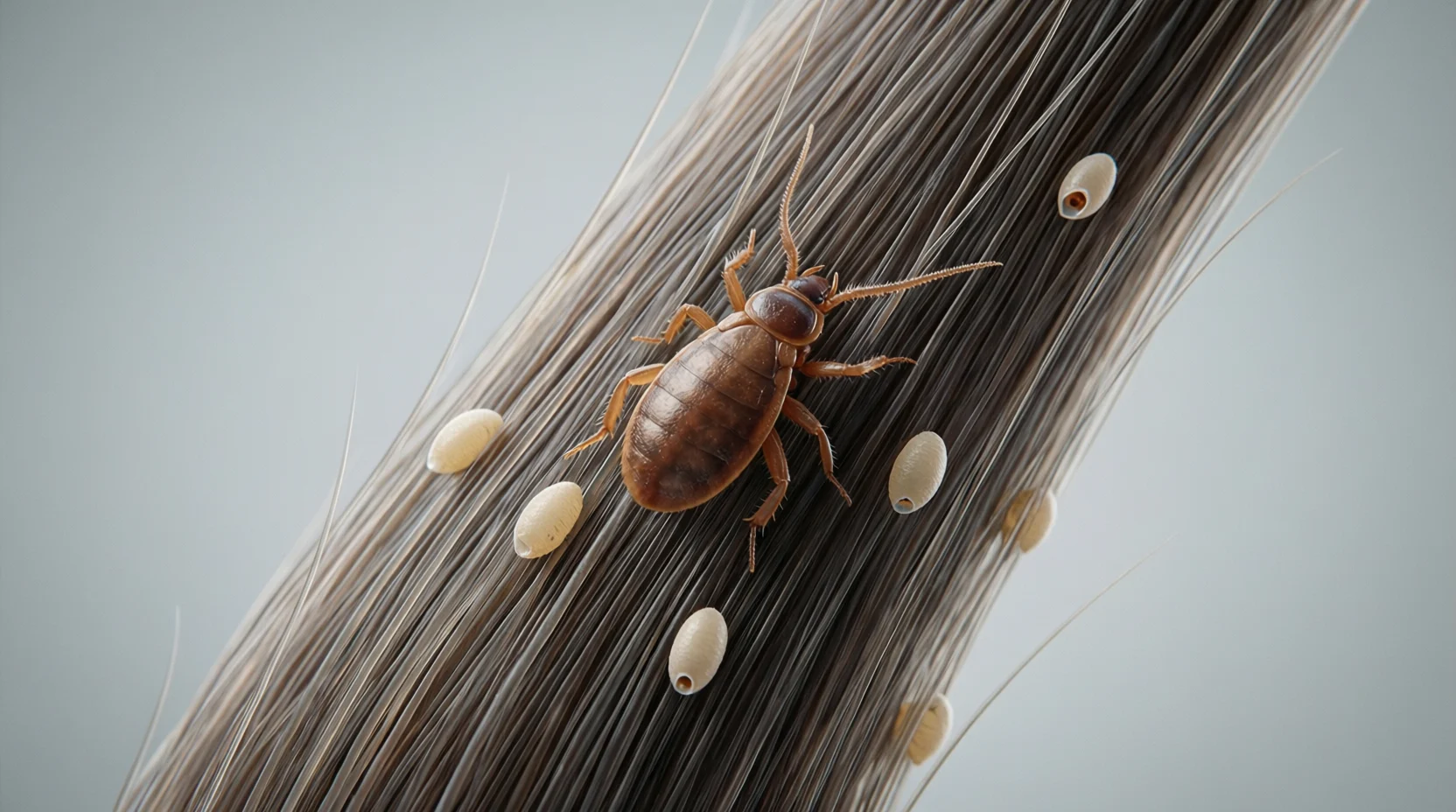
Lice look like tiny, wingless insects about the size of a sesame seed, usually tan, gray, or brown, and they live close to the scalp.
What Lice Look Like (Plain Explanation)
Lice are very small parasitic insects that live on the scalp and feed on blood.
Visually, lice usually look like:
- tiny bugs, similar to a sesame seed
- tan, gray, or light brown in color
- flat before feeding, rounder after feeding
- fast-moving when disturbed
- wingless and crawling, not jumping
Because they blend into hair easily, spotting them takes patience.
Bold Summary: Lice are tiny, crawling insects near the scalp that resemble small brown or gray sesame seeds.
What Lice Eggs (Nits) Look Like
Often, people see nits before seeing live lice.
Nits usually look like:
- tiny white, yellow, or tan dots
- oval or teardrop shaped
- firmly attached to hair strands
- located close to the scalp
- difficult to slide off
Because dandruff flakes move easily, while nits stay stuck, this difference matters.
Where Lice Are Most Commonly Found
Lice prefer warm, hidden areas. Therefore, they are commonly found:
- behind the ears
- at the nape of the neck
- along the scalp line
- under thick hair sections
Because of this, careful checking is essential.
Size Comparison: Lice vs Nits
| Item | Size | Appearance |
|---|---|---|
| adult lice | sesame seed | brown or gray |
| nits | grain of sand | white or yellow |
| dandruff | flakes | loose, dry |
This table helps separate lice from common scalp issues.
How Lice Look on Different Hair Types
Lice look slightly different depending on hair color and thickness.
- on dark hair: lice appear lighter
- on light hair: lice appear darker
- on thick hair: harder to spot
- on thin hair: easier to detect
As a result, lighting and patience are very important.
Realistic Descriptions From People With Lice
- “they look like tiny moving dots”
- “i saw something crawling near the scalp”
- “the eggs looked glued to hair”
- “they were small but fast”
- “it wasn’t obvious at first”
- “i needed a comb to see them”
- “they blended into the hair color”
When It’s Likely Lice — And When It’s Not
✅ Signs it’s lice
- constant itching
- crawling sensation
- visible bugs near scalp
- stuck white eggs
❌ Signs it may be something else
- loose flakes
- dry scalp only
- redness without bugs
- itching without eggs
Comparison Table
| Condition | Look | Why |
|---|---|---|
| lice | bugs + eggs | parasitic insects |
| dandruff | flakes | dry scalp |
| psoriasis | thick scales | skin condition |
Similar Conditions Often Confused With Lice
- Dandruff: loose white flakes
- Dry scalp: itching without bugs
- Hair product residue: washable buildup
- Scalp eczema: redness and scaling
Knowing these differences prevents unnecessary panic.
FAQs About What Lice Look Like
1. Can you see lice with the naked eye?
Yes, but they are very small.
2. Are lice white or black?
Usually tan, gray, or brown.
3. Do lice jump or fly?
No, they only crawl.
4. Are nits easy to remove?
No, they stick tightly.
5. Can lice hide in hair?
Yes, very easily.
6. Do lice only affect kids?
No, anyone can get them.
7. Can lice live off the head?
Only briefly, usually less than two days.
Final Thought
Lice may be tiny, but understanding what they look like makes a huge difference in spotting them early and responding calmly.
That sesame-seed size, the crawling movement, and the tightly attached nits are clear visual clues once you know what to look for.
While lice can feel uncomfortable and embarrassing, they are extremely common and manageable.
Most importantly, recognizing lice quickly prevents spreading and stress. With the right knowledge and careful checking, lice become far less intimidating and far easier to handle with confidence.

Welcome to ReplyResponses.com, your go-to hub for quick, witty, and clever replies for every situation! Whether you’re looking to spice up your chats, craft the perfect comeback, or make your messages stand out, we’ve got you covered. From funny one-liners to smart responses, our platform helps you communicate with confidence and flair. Get ready to never run out of words again—because every conversation deserves the perfect reply!