I still remember the first time I saw a cavity in my own mouth. I was brushing my teeth when I noticed a tiny dark spot on one of my molars.
At first, I thought it was just a stain from coffee, but soon I realized it looked different it was slightly pitted and felt rough when I ran my tongue over it.
That moment made me curious about cavities and how to recognize them early. Understanding what a cavity looks like can help you catch dental problems before they get serious and save yourself from pain, fillings, or more expensive treatments later on.
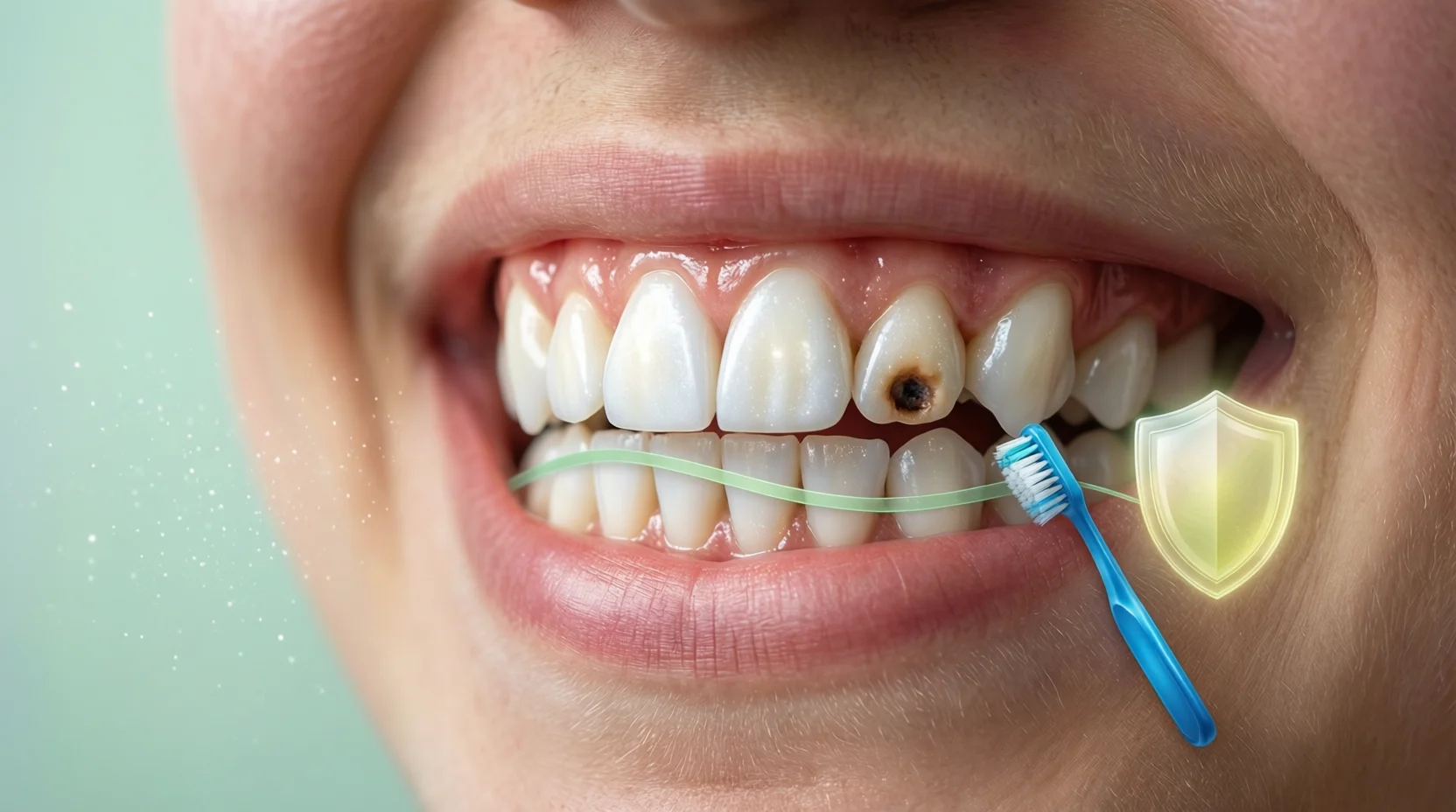
Quick Answer: A cavity typically appears as a small dark spot, pit, or hole on the tooth surface, sometimes with rough or discolored enamel.
What a Cavity Is and How It Appears
A cavity, also known as dental caries, is tooth decay caused by bacteria breaking down the enamel and dentin. Over time, if untreated, it can form a hole in the tooth.
Plain-English Explanation:
- Cavities start small and may appear as tiny white, brown, or black spots.
- They can make the tooth surface feel rough or pitted.
- Left untreated, they can grow into holes that cause pain, sensitivity, or infection.
Example Sentence:
- “The dentist showed me a tiny black spot on my molar—that was the start of a cavity.”
In short: A cavity looks like a small dark spot, pit, or hole on a tooth that may feel rough or sensitive.
Where Cavities Are Commonly Found
- Molars (back teeth): Most cavities appear here because these teeth have grooves that trap food.
- Between Teeth: Areas that are hard to reach with a toothbrush.
- Near the Gum Line: Plaque buildup can lead to decay.
Tone: Informal and relatable for awareness, but neutral when discussing medical context.
7 Real-Life Scenarios Showing Cavities
- Noticing a tiny dark spot on a back molar while brushing.
- Feeling a rough patch on a tooth with your tongue.
- Experiencing mild sensitivity to cold or hot drinks.
- Seeing discoloration between teeth during flossing.
- Detecting a small hole in enamel during a dental check-up.
- Experiencing slight pain when biting into hard food.
- Dark spots forming where plaque accumulates despite brushing.
When to Detect vs. When to See a Dentist
✅ Early Detection Signs:
- Small dark or white spots
- Rough enamel surface
- Mild sensitivity
❌ Signs You Must See a Dentist:
- Pain or throbbing in the tooth
- Large visible holes
- Swelling, bleeding, or pus around gums
- Persistent bad breath
Comparison Table:
| Feature | Early Cavity | Advanced Cavity |
|---|---|---|
| Color | White, light brown, small dark spots | Dark brown or black, larger holes |
| Surface | Slight roughness or pit | Deep holes, significant enamel damage |
| Pain | Usually none or mild | Sharp, throbbing, or constant |
| Location | Molars or between teeth | Any tooth, often back molars |
Similar Dental Terms
| Term | Meaning | Notes |
|---|---|---|
| Plaque | Sticky bacterial film | Leads to cavities if not removed |
| Tartar | Hardened plaque | Needs professional cleaning |
| Tooth Decay | Breakdown of enamel and dentin | Causes cavities |
| Enamel Erosion | Wearing away of tooth enamel | Can cause sensitivity |
| Filling | Material used to repair cavity | Prevents further decay |
FAQs About Cavities
1. How do I know if I have a cavity?
Look for dark spots, pits, rough enamel, or sensitivity to hot/cold.
2. Can cavities be seen without a dentist?
Small cavities can be hard to detect; regular dental check-ups are best.
3. Are cavities painful immediately?
Not always—pain usually occurs once decay reaches dentin or nerves.
4. Can cavities be reversed?
Early enamel demineralization can be improved with fluoride, but holes need fillings.
5. Do cavities spread?
Yes, untreated cavities grow larger and may affect nearby teeth.
6. How to prevent cavities?
Brush twice daily, floss, reduce sugar, and visit the dentist regularly.
7. Can diet affect cavity formation?
Yes, sugary and acidic foods increase the risk of decay.
Final Thought
Cavities start small but can grow into serious dental problems if ignored. Recognizing dark spots, pits, or rough enamel early helps maintain healthy teeth.
Regular brushing, flossing, and dental visits are key to preventing cavities and keeping your smile bright and pain-free.
Understanding what a cavity looks like empowers you to act early, protect your teeth, and avoid unnecessary discomfort or treatment.

Stuck on what to say? ReplyResponses.com gives you clever, funny, and savage comebacks for every moment — because silence isn’t golden when you can drop a perfect reply!