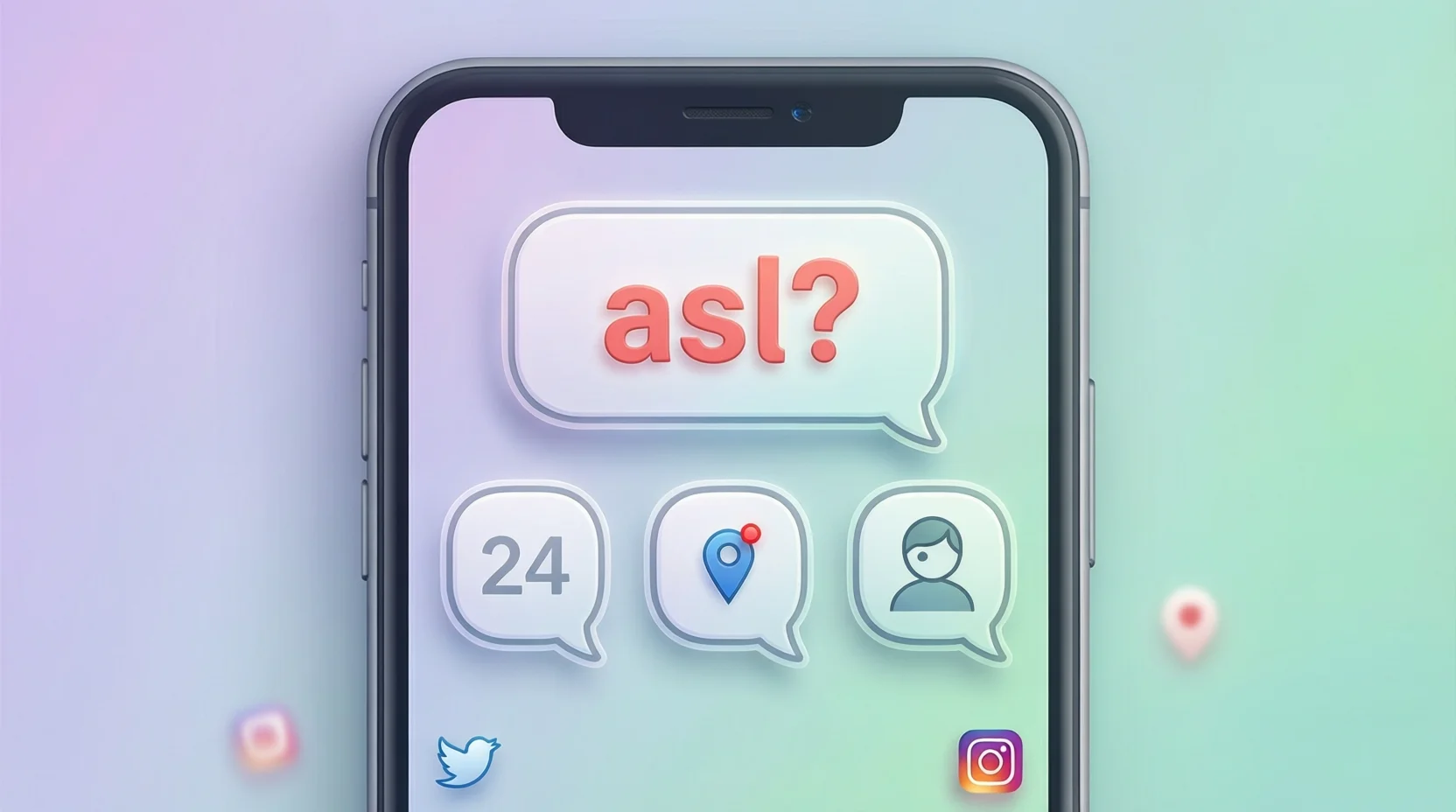
The first time I saw someone type “asl?” in a chat, I paused for a second. The message felt casual, quick, and slightly curious.
At first, I wondered if it was a typo or maybe a new slang word I hadn’t learned yet. Then, after seeing it pop up again in online chats and older social media screenshots, I realized it was something people had been using for years.
Especially in casual conversations, ASL appears when someone wants to know more about the person they’re chatting with.
Once you understand what ASL means and how it’s used, it becomes very easy to recognize and respond to naturally.
Quick Answer:
ASL means “age, sex, location”, and it’s used to ask basic personal details in casual online conversations.
What ASL Means in Text
Full Form:
- ASL = Age, Sex, Location
Plain-English Explanation:
ASL is a short way to ask three questions at once: how old someone is, what their gender is, and where they are from. Instead of typing all three questions separately, people use ASL to keep the conversation fast and informal.
Why People Use ASL:
- It saves time while chatting
- It helps get basic info quickly
- It feels casual and conversational
- It was popular in early internet chat rooms
Example Sentence:
- “hey, asl?”
In short: ASL is a casual way to ask someone’s age, gender, and location in one short message.
Where ASL Is Commonly Used
- Text messages
- Online chat rooms
- Gaming chats
- Social media DMs
- Dating apps
- Casual online communities
Tone:
- Very casual and informal
- Not appropriate for professional or serious conversations
9 Realistic Conversation Examples (Lowercase, Natural Style)
- “hey what’s up, asl?”
- “we’ve been chatting for a bit, asl?”
- “asl? just curious.”
- “lol asl?”
- “before we keep talking, asl?”
- “asl so i know who i’m talking to.”
- “someone just asked me asl out of nowhere.”
- “asl isn’t really used much anymore.”
- “they asked asl like it was 2008.”
When to Use ASL and When Not to Use It
✅ When ASL Works
- Casual online chats
- Informal social conversations
- Gaming or anonymous platforms
- Friendly curiosity
❌ When ASL Should Not Be Used
- Professional settings
- Work-related messages
- Conversations with strangers who didn’t invite personal questions
- Situations involving privacy concerns
Comparison Table
| Context | Example Phrase | Why It Works / Doesn’t |
|---|---|---|
| casual chat | “asl?” | works: informal tone |
| dating app | “asl before we talk more?” | works: common usage |
| work email | “asl please” | doesn’t work: inappropriate |
| first message | “asl??” | doesn’t work: can feel invasive |
Similar Slang Words and Alternatives
| Slang / Phrase | Meaning | When to Use |
|---|---|---|
| how old are you | age question | polite tone |
| where are you from | location | neutral chats |
| male or female | gender | sensitive context |
| about you? | general info | safer alternative |
| tell me about yourself | broader intro | respectful option |
FAQs About ASL
1. What does ASL stand for in texting?
It stands for age, sex, location.
2. Is ASL still used today?
Yes, but it’s less common than before.
3. Is ASL rude?
It can be, depending on timing and context.
4. Is ASL safe to answer?
Only if you’re comfortable sharing that information.
5. Is ASL used on dating apps?
Yes, especially in casual or early conversations.
6. Should kids answer ASL questions?
No, it’s better for minors to avoid sharing personal details.
7. Are there better alternatives to ASL?
Yes, asking politely and separately is often better.
Final Thought
ASL is a classic piece of internet slang that reflects how online conversations used to start and sometimes still do.
While it’s a fast and simple way to ask about age, gender, and location, it can also feel intrusive if used too quickly or without context.
Because of that, understanding when and how to use ASL matters just as much as knowing what it means.
In today’s texting culture, many people prefer more respectful and gradual ways of getting to know someone.
Still, ASL remains a recognizable term that shows how digital communication has evolved over time.
Knowing its meaning helps you stay informed, avoid awkward moments, and communicate more confidently online.

John Michael is the creative mind behind replyresponses.com, sharing witty, smart, and relatable responses for every situation — helping people text confidently, laugh often, and connect better every day.