You’re setting an alarm on your phone, scheduling an online meeting, or texting someone, “let’s talk at 8,” and suddenly the question pops up 8 am or 8 pm? We use am and pm every single day, yet many people never stop to think about what they actually stand for.
You might have seen them on clocks, calendars, school schedules, or social media posts, but the meaning often feels automatic. Still, once you truly understand what am and pm stand for, telling time becomes clearer and way less confusing.
Quick Answer:
AM and PM are Latin terms used to divide the day into morning and afternoon/night hours.
What Do AM and PM Stand For? (Plain-English Explanation)
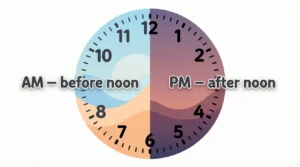
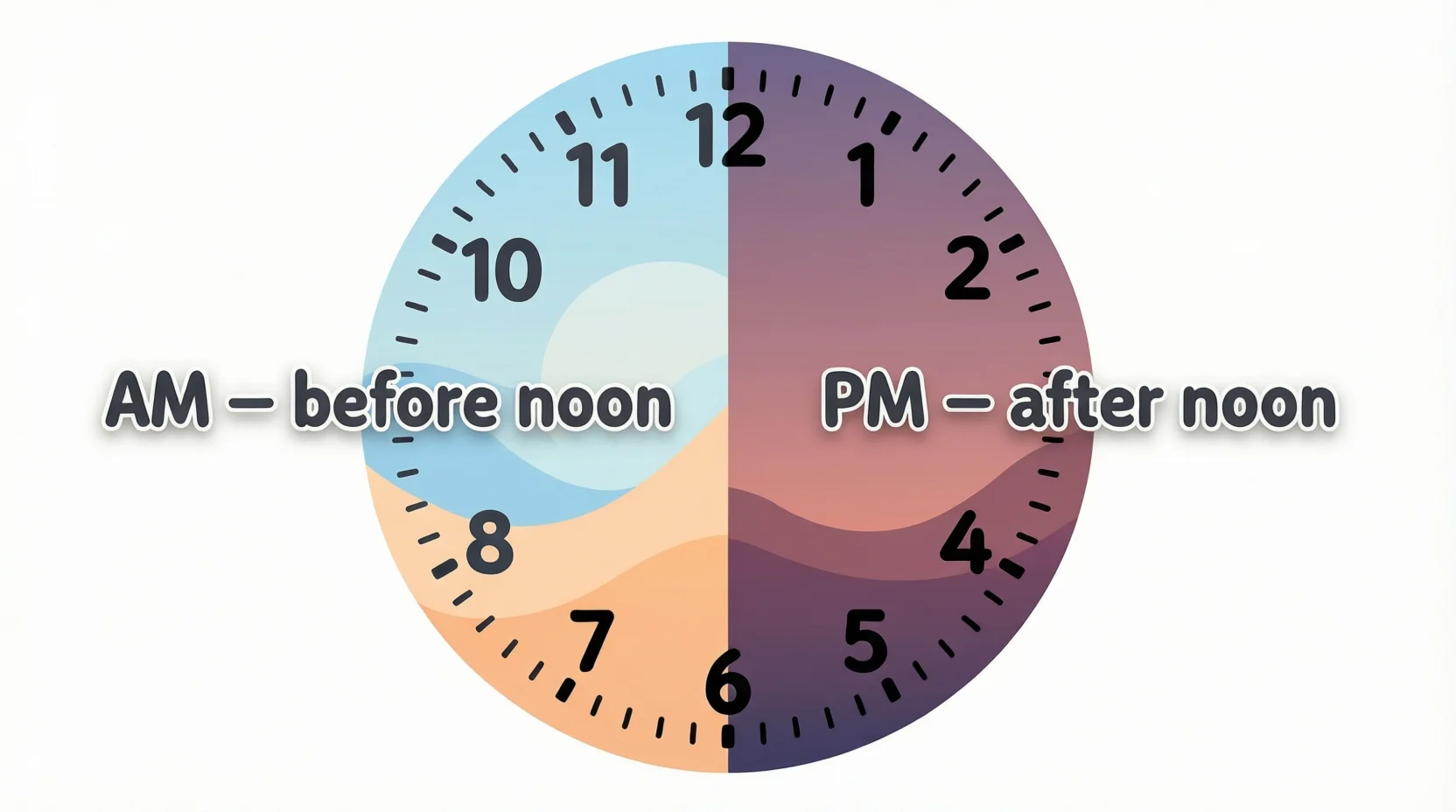
AM stands for Ante Meridiem, which means “before midday.”
PM stands for Post Meridiem, which means “after midday.”
In simple words:
- AM = midnight to just before noon
- PM = noon to just before midnight
There is no slang here—these are traditional time terms used worldwide.
Why people use them:
They help avoid confusion by clearly separating the day into two 12-hour halves.
Example sentence:
“my flight leaves at 6 am, so i have to wake up early.”
Bold summary:
AM means before noon, and PM means after noon in the 12-hour clock system.
How AM and PM Work on a Clock
Here’s the easiest way to remember it:
- 12:00 am → midnight (start of the day)
- 1:00 am – 11:59 am → morning
- 12:00 pm → noon
- 1:00 pm – 11:59 pm → afternoon, evening, and night
A common mistake is mixing up 12 am and 12 pm, but remember:
- midnight = 12 am
- noon = 12 pm
Where Are AM and PM Commonly Used?
AM and PM are used almost everywhere in daily life, such as:
- phone clocks and alarms
- school and work schedules
- appointment reminders
- travel times
- social media posts
- texting and DMs
Tone:
The tone is neutral and universal. It works in casual chats, professional emails, and formal documents.
Realistic Conversation Examples (Modern Texting Style)
Here’s how people actually use am and pm online:
- “meet me at 7 pm”
- “i woke up at 5 am today”
- “is the call at 10 am or 10 pm?”
- “posting this at 2 am was a mistake”
- “let’s do brunch at 11 am”
- “movie starts at 9 pm”
- “alarm set for 6 am 😭”
- “why are you texting at 3 am”
When to Use and When Not to Use AM and PM
Do Use Them When:
- telling time clearly
- setting alarms or meetings
- avoiding confusion
- using the 12-hour clock
Don’t Use Them When:
- using a 24-hour (military) clock
- the time is already obvious from context
Simple Comparison Table
| context | example | why it works / doesn’t |
|---|---|---|
| alarm | “wake me at 6 am” | clear timing |
| meeting | “call at 4 pm” | avoids confusion |
| military time | “16:00 pm” | incorrect |
| casual chat | “later tonight” | am/pm not needed |
Similar Terms and Alternatives
Depending on the situation, people may also use:
| term | meaning | when to use |
|---|---|---|
| morning | early part of day | casual talk |
| afternoon | after noon | everyday use |
| evening | late day | informal |
| night | late hours | casual |
| 24-hour time | 18:00, 22:00 | travel, military |
| noon | 12 pm | clarity |
| midnight | 12 am | clarity |
FAQs About AM and PM
1. What does AM stand for exactly?
Ante Meridiem, meaning before noon.
2. What does PM stand for exactly?
Post Meridiem, meaning after noon.
3. Is 12 am midnight or noon?
12 am is midnight.
4. Is 12 pm midnight or noon?
12 pm is noon.
5. Are am and pm capitalized?
Both are correct: AM/PM or am/pm.
6. Do all countries use AM and PM?
No, many countries prefer the 24-hour clock.
7. Can am and pm be used in texting?
Yes, they’re very common and clear.
Final Thought
So, what do am and pm stand for? They come from Latin and help divide the day into before noon and after noon.
Even though we use them automatically, understanding their meaning removes confusion especially with alarms, meetings, and schedules.
Once you remember that 12 am is midnight and 12 pm is noon, telling time becomes simple and stress-free.

Stuck on what to say? ReplyResponses.com gives you clever, funny, and savage comebacks for every moment — because silence isn’t golden when you can drop a perfect reply!